

You open a website. It loads fast. No issues.
Behind the scenes, a proxy might be helping out. But not all proxies work the same way.
Some people mix up forward proxy vs reverse proxy. That is normal. They sound similar. But they do opposite jobs.
Let me break this down. No hard tech talk. Just clear answers.
What is the difference between a forward and a reverse proxy?
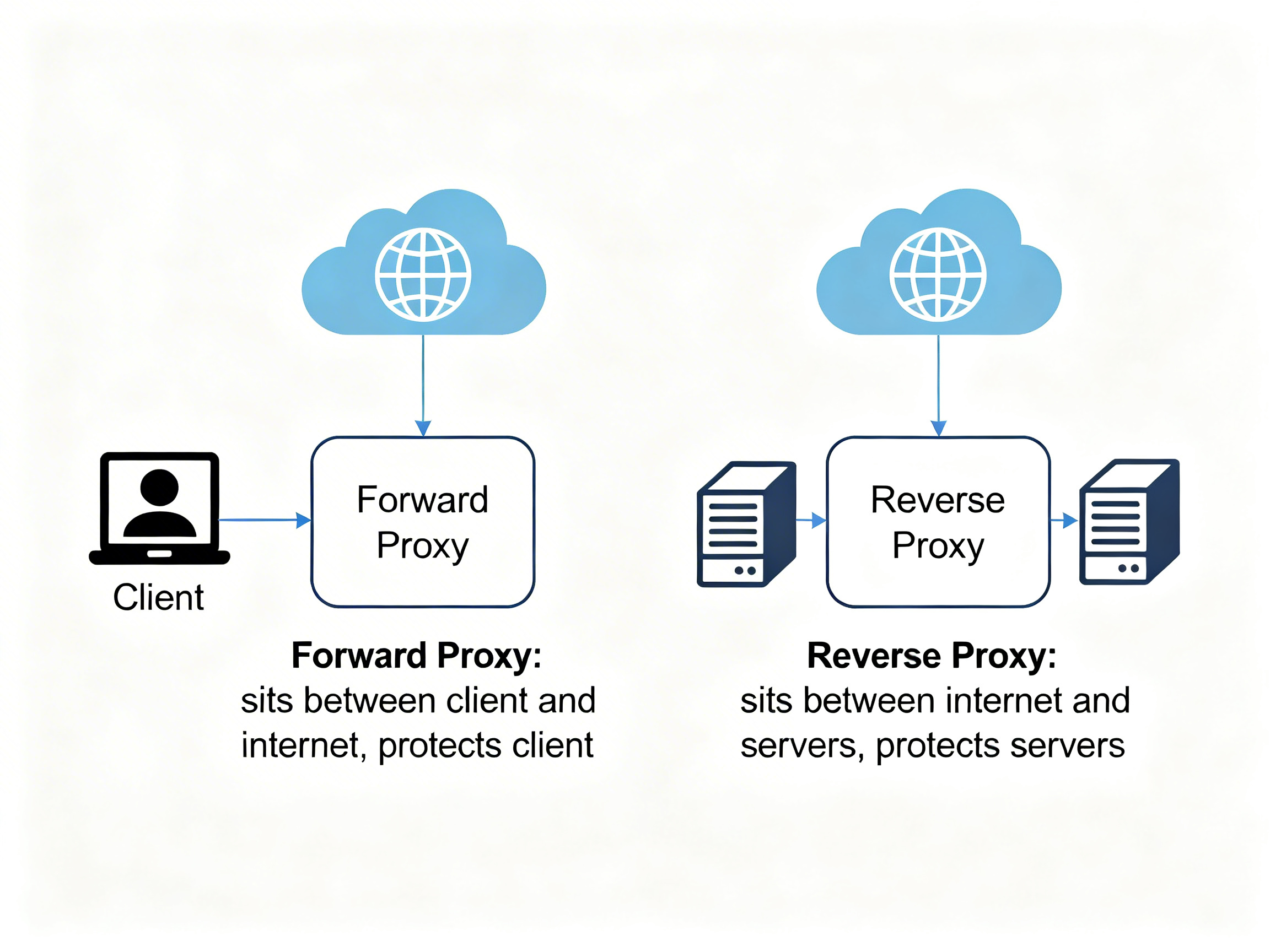
Here is the simplest way to remember.
A forward proxy works for you, the client. It hides your IP when you go out to websites.
A reverse proxy works for the server. It hides the backend server from visitors.
Same middleman role. Different direction.
Still confused? This table shows the difference side by side.
| Feature | Forward Proxy | Reverse Proxy |
|---|---|---|
| Who it works for | The client (you) | The server (website owner) |
| Direction of traffic | Outgoing requests to the internet | Incoming requests from visitors |
| What it hides | Your real IP address | Backend server IPs |
| Who uses it | Individuals, office workers, data collectors | Website owners, app developers |
| Main goal | Privacy, access control, bypass blocks | Load balancing, security, speed |
| Example | You use a proxy to visit a blocked site | Netflix uses a proxy to manage traffic |
So if you want to protect yourself, pick a forward proxy.
If you want to protect your website, pick a reverse proxy.
What is an example of a forward proxy?
Imagine you are in an office. You want to check social media. But the company blocks it.
You use a forward proxy to get around that block. The proxy sends your request out. The website sees the proxy's IP, not yours.
Another example: web scraping. If you collect public data from e‑commerce sites, you rotate forward proxies so the target site does not block you.
So a forward proxy helps you stay private or bypass restrictions.
What about a reverse proxy example?
Now flip the picture.
You run a popular online store. Thousands of people visit every minute.
One server cannot handle all that traffic. So you put a reverse proxy in front of several servers.
When someone visits your store, they talk to the reverse proxy. The proxy sends their request to a free backend server. Then it sends the response back.
The visitor never sees your backend servers. That is safer and faster.
Big sites like Netflix or Amazon use reverse proxies every day.
Is VPN a forward proxy or reverse proxy?
This question comes up a lot.
A VPN is not exactly a forward proxy. But they are cousins.
A forward proxy usually works for one app, like your browser. A VPN sends all your device traffic through an encrypted tunnel.
So a VPN acts like a forward proxy, but stronger and broader. Neither one is a reverse proxy. Reverse proxies protect servers, not users.
Quick rule:
- -Need to hide your browsing? Look at forward proxies or VPNs.
- -Need to protect your website? Use a reverse proxy.
Why does this matter to you?
If you run a website or collect online data, choosing the wrong proxy hurts you.
Use a forward proxy when you want:
- -Privacy while browsing
- -Bypass geo‑blocks
- -Rotate IPs for scraping
Use a reverse proxy when you need:
- -Load balancing (spread out traffic)
- -Hide backend servers
- -Speed up content delivery
Many businesses use both. Forward proxy for data collection. Reverse proxy for their own site. That is smart.
Ready to try the right proxy?
You have read the differences. Now it is time to test.
Not all proxy services are the same. Some are slow. Some leak your IP.
We offer clean residential proxies. No weird setups. No hidden tricks.
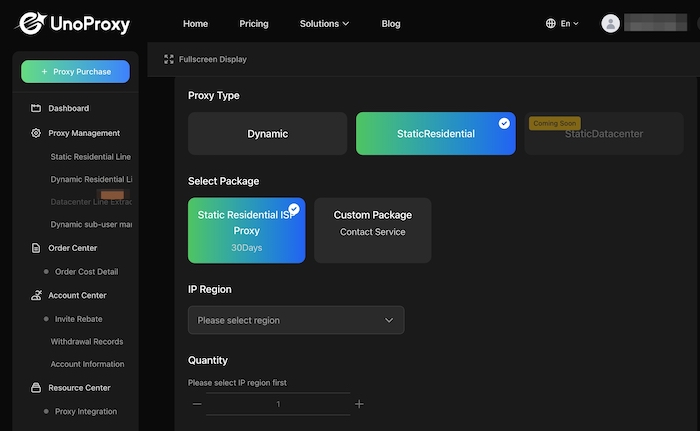
You can also check the official docs to learn more about proxy rules and best practices: https://www.unoproxy.net/en/blog
Final take
Forward proxy vs reverse proxy is not hard once you see the direction.
- -Forward proxy = client side. Hides you.
- -Reverse proxy = server side. Hides your servers.
Now you know what is the difference between a forward and a reverse proxy. You also have an answer for is VPN a forward proxy or reverse proxy (close, but not the same).
And if someone asks what is an example of a forward proxy? Tell them: office browsing, VPN‑like tools, or web scraping.
Stop guessing. Start using the right proxy for your job.
👉 Sign up and try our residential proxies today.
