Ever clicked on a video only to be blocked by a geo-restriction, or wondered if your coffee shop's Wi-Fi is safe? In the quest for online freedom and security, two tools dominate the conversation: proxies and VPNs. While they both hide your IP address, they are not interchangeable. Choosing the wrong one can leave your data exposed or your tasks unfinished.
Understanding the core difference is crucial. This guide will cut through the technical noise, giving you a clear, expert breakdown of proxies and VPNs. You'll learn exactly which tool is right for your specific need, whether it's streaming, gaming, web scraping, or securing your bank details. By the end, you'll be able to make an informed choice and can explore how UnoProxy's robust network provides the premium proxy solution you need for specialized tasks. Let's dive in.
How Your Internet Traffic Works: The Basic Principle
To understand proxies and VPNs, imagine sending a postcard through the mail. Your data is the message, and your IP address is the return address written on the top corner. Without any protection, every server you connect to can see this "return address," building a profile of your location and habits.
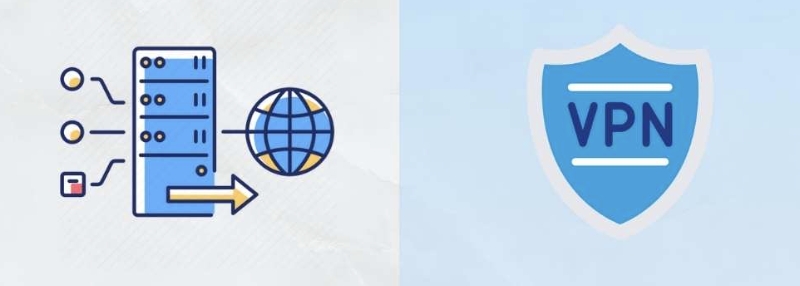
Proxies and VPNs both act as a middleman in this process. Instead of your data going directly to a website, it first goes to this intermediary server. The website then sees the server's IP address, not yours. This is the fundamental similarity. However, how they handle your "postcard" is where the critical differences lie, defining their purpose and security level.
What is a Proxy Server? The Specialized Redirect
A proxy server is a gateway for a specific application, like your web browser or a data-scraping tool. It acts as a simple intermediary, forwarding requests on your behalf.
How it Works: You configure a specific app to route its traffic through the proxy server. When you visit a website, the request goes to the proxy first, which then forwards it to the target site. The site sees the proxy's IP address and responds to it. The proxy then sends that response back to you.
- -Level of Operation: Application-level (only the traffic from the configured app).
- -Encryption: Typically, proxy servers do not encrypt your traffic. Your data is like a postcard in a clear envelope—the address is hidden, but the message is still visible to anyone who intercepts it.
- -Best Use Cases:
Web Scraping & Data Collection: Rotating through many IP addresses to avoid being blocked.
Bypassing Basic Geo-Blocks: Accessing region-locked content like news articles or videos.
Social Media Management: Managing multiple accounts without triggering security flags.
What is a VPN? The Secure, Encrypted Tunnel
A Virtual Private Network (VPN) is a comprehensive security service that protects all internet traffic from your device.
How it Works: You launch a VPN client on your device, which encrypts all your internet traffic and tunnels it to a remote VPN server. The server then decrypts the traffic and sends it to the final destination. Every website you visit sees the VPN server's IP address.
- -Level of Operation: Operating system-level (all traffic, from every app, is protected).
- -Encryption: VPNs use strong encryption (e.g., AES-256). This creates a secure "tunnel," turning your postcard into a sealed, impenetrable package. No one, not even your ISP, can see what's inside.
- -Best Use Cases:
Securing Public Wi-Fi: Protecting sensitive data like passwords and credit card numbers on unsecured networks.
Complete Online Privacy: Hiding your browsing activity from your Internet Service Provider (ISP).
Remote Work: Securely accessing company networks and resources from anywhere.
Proxy vs VPN: A Head-to-Head Comparison
This table breaks down the core differences clearly.
| Feature | Proxy Server | VPN |
|---|---|---|
| Encryption | Typically None | Strong Encryption (AES-256) |
| Traffic Coverage | Application-Level (e.g., browser only) | System-Wide (all apps & background data) |
| Primary Function | IP Masking, Bypassing Content Filters | Privacy, Security, IP Masking |
| Impact on Speed | Often Faster (minimal overhead) | Can be Slower (due to encryption overhead) |
| Privacy from ISP | No | Yes |
| Ideal For | Data-intensive tasks, Web Scraping | Online Banking, Public Wi-Fi, Total Privacy |
The choice isn't about which tool is universally "better," but which is right for your specific goal. A proxy is a nimble specialist for specific tasks, while a VPN is a heavyweight bodyguard for your entire digital life.
FAQs
Which is better, VPN or proxy?
For all-around security and privacy, a VPN is superior. For specialized, high-speed tasks that require IP rotation—like large-scale web scraping, ad verification, or sneaker copping—a high-quality proxy service like UnoProxy is the undisputed better tool. It's about using the right tool for the job.
Do I need a VPN if I have a proxy?
Yes. A proxy does not provide encryption. If you check your bank account, send emails, or browse on public Wi-Fi, you absolutely need the full-system protection of a VPN. They serve different, complementary purposes.
Can I use a VPN as a proxy?
Technically, yes—a VPN masks your IP address. However, it's inefficient for tasks like data scraping. Using a VPN for this would be like using a semi-truck to go grocery shopping; it works, but it's overkill and inefficient. Dedicated proxies are designed for speed and scale.
Is using a proxy server illegal?
In most countries, using a proxy is perfectly legal. However, illegality is determined by the action, not the tool. Using a proxy for illegal activities (like hacking or fraud) remains illegal. Reputable services like UnoProxy enforce strict terms of service that prohibit any illicit use.
How to Choose the Right One for Your Needs
Your decision should be guided by a simple question: What am I trying to achieve?
-Choose a VPN if: Your primary goal is security and privacy. You want to encrypt all your internet traffic, especially on public networks, and hide your activity from your ISP.
-Choose a Proxy if: Your primary goal is functionality and efficiency for specific tasks. You need to scrape web data, manage multiple social media accounts, access geo-restricted content for research, or bypass content filters without the overhead of encryption.
For those who need the power, speed, and reliability of premium proxies, UnoProxy is the ideal solution. We provide a vast pool of high-quality, rotating IP addresses designed for demanding tasks that require precision and scale. Our service ensures high success rates and blazing-fast connections for developers, marketers, and data scientists.
Ready to experience the difference a professional proxy service can make? Register for UnoProxy today and unlock the full potential of the web for your projects.